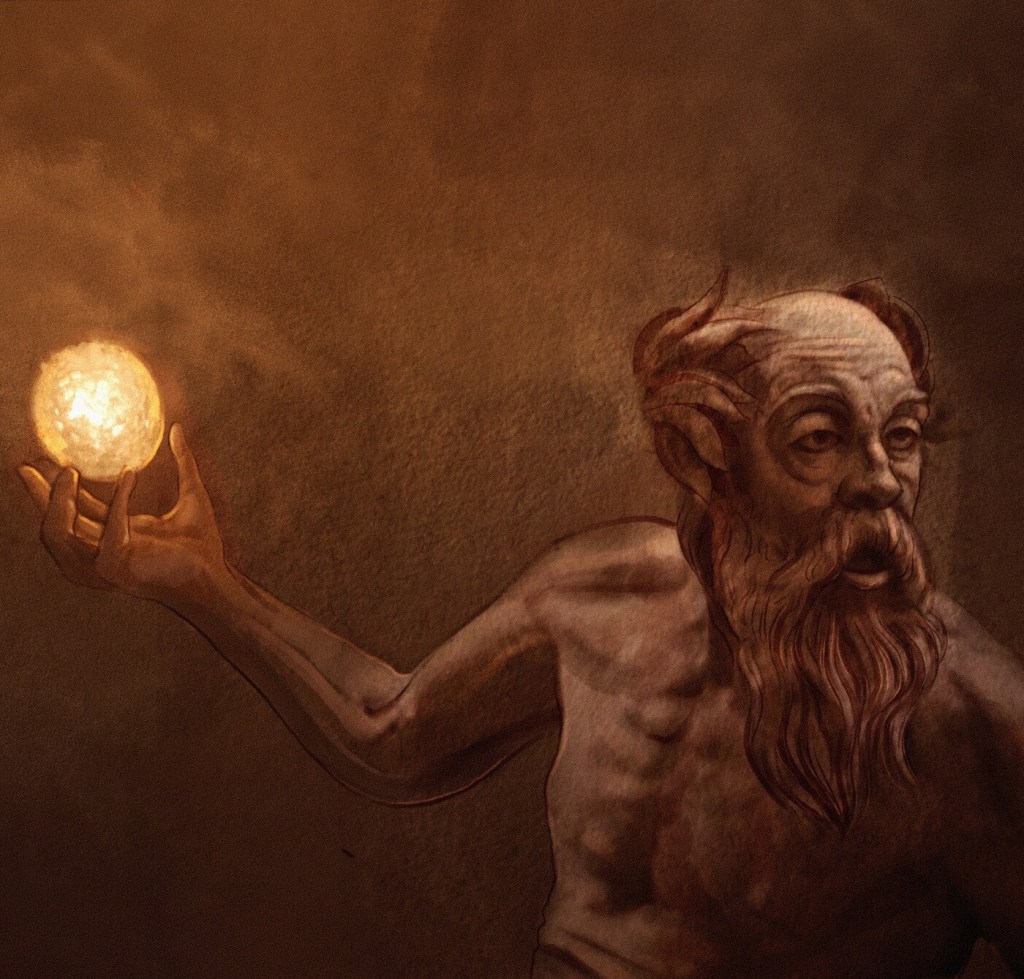
Ellerim yanıyor ve bu bir metafor değil. Ellerim yanıyor ve ben, tüm duyularımla bunu biliyorum. Alevler, derimin kıvrımlarına sızıyor, etimi yakıyor, kemiğimi kavrulmuş bir taş gibi sıkıştırıyor. Yanık etin keskin kokusu havaya karışıyor, ve ben, kendi varlığımın tükenişini kokluyorum. Ama işin garibi, bu tükeniş hiçbir zaman tamamlanmıyor.
Alevler beni yutmuyor, beni küllere çevirmiyor, beni yok etmiyor. O noktaya geliyor, orada duruyor, ve aynı anı tekrar ediyor. Yıllardır, belki de sonsuz bir zamandır, hep bu sınırdayım—yıkımın eşiğinde, ama asla yıkılmayan. Bir varlık nasıl olur da kendi yok oluşuna bu kadar yakın olup, asla ona ulaşamaz? Bir beden, kendi mahvını nasıl olur da bu kadar yakından hisseder ama yine de varlığını sürdürebilir?
Önce isyan ettim.
Suya koştum—ama su, onu söndürmek yerine, alevi benimsedi. Belki de korktu. Beni içine çekti, derinliklerine sürükledi, ama alev hâlâ oradaydı. Sonra toprağa bastım, avuçlarımı keskin taşlara sürdüm, parmaklarımı kara gömdüm. Ama toprak hiçbir şey sormadı. Hiçbir şey istemedi. Beni olduğu gibi kabul etti—yanan ve yanmaya devam eden bir varlık olarak. Ama acımı almadı.
Sonra rüzgâra döndüm. Belki küllerimi savurur, beni bu yanmış kabuktan arındırırdı. Ama hayır. Rüzgâr, alevin dostuydu. Ona nefes verdi, ona güç kattı, ve ellerim artık yalnızca yanmıyor, yanmak için yaşıyordu.
: Bu alev benimle dalga geçiyor.
Ne yok ediyordu beni, ne de serbest bırakıyordu. Sonsuz bir döngünün içinde, bir ritüelin mahkûmuydum. Ne kadar süredir bu hâlde olduğumu bilmiyordum. Zaman, benim için anlamını yitirmişti. Günler, yıllar, belki çağlar boyunca böyle kaldım.
Sonra birini gördüm.
Küllerden doğmuş bir figür müydü, yoksa yalnızca bilinç altımın bana sunduğu bir yanılsama mı? İnsan mıydı, yoksa içimdeki yanmanın bir yansıması mı? Belki de hiç var olmamıştı, ama oradaydı.
Oturdu karşıma. Beni görüyordu.
Ellerime baktı. Ona göstermek istememiştim, ama alevler var olduklarını saklamayı bilmezdi.
“Bunu neden reddediyorsun?”
Sesi, ne kınayıcıydı ne de şefkatli. Sadece kaçınılmaz bir gerçeği dile getiriyordu.
“Reddetmek mi? Ellerim yanıyor!” diye haykırdım.
Bunu bilmiyor muydu? Alevin içindeki kıvranışımı, ıstırabın beni lime lime doğrayan pençesini, varoluşun taş gibi ağırlığını? İnsan, böyle bir şeyi nasıl reddedemezdi?
Ama o, hâlâ sakindi.
“Bu alevin iki yüzü var,” dedi. “Onu hafifletebilirsin ya da onu kullanabilirsin. Ama onu inkâr edemezsin.”
Hafifletmek? Kullanmak? Ama ya kaybedeceklerim?
Ellerim bu hâlde kalırsa, bir gün tamamen yanıp tükenir miydi? Peki ya alevleri ben yönlendirirsem? O zaman hâlâ ben olur muydum? Yoksa ateşe hükmeden biri, er ya da geç ateşin kendisine mi dönüşürdü?
Eğer onu reddedersem, bana işkence etmeye devam edecekti. Eğer onun mahkûmu olursam, ben artık yalnızca bir yanıştan ibaret olacaktım. Ama belki de bir üçüncü yol vardı. Belki de alev, benim en büyük düşmanım değil, varlığımı kavrayabileceğim tek anahtardı.
Fin
My hands are burning, and this is not a metaphor. My hands are burning, and I know it with every fiber of my being. The flames seep into the folds of my skin, searing my flesh, compressing my bones like scorched stone. The sharp scent of burnt meat permeates the air, and I inhale the slow dissolution of my own existence. But the strange thing is, this dissolution never completes itself.
The flames do not consume me, do not reduce me to ashes, do not annihilate me. They reach the brink, stop there, and replay the same moment over and over. For years—perhaps for an eternity—I have remained at this threshold, on the verge of destruction, yet never destroyed. How can a being exist so close to its own obliteration without ever reaching it? How can a body feel its own ruin so intimately, yet persist in its existence?
At first, I rebelled.
I ran to the water—but instead of extinguishing the fire, it embraced it. Perhaps it was afraid. It pulled me in, dragged me into its depths, yet the flames remained. Then I turned to the earth, pressing my palms against sharp stones, burying my fingers in the soil. But the earth asked nothing. It demanded nothing. It accepted me as I was—a being that burns and continues to burn. Yet it did not take away my pain.
Then I turned to the wind. Perhaps it would scatter my ashes, cleanse me of this charred shell. But no. The wind was the fire’s ally. It fed it, strengthened it, and now my hands did not just burn—they lived to burn.
And that was when I realized: this fire was mocking me.
It neither destroyed me nor set me free. I was trapped in an endless cycle, a prisoner of a ritual that had no resolution. I no longer knew how long I had been like this. Time had lost all meaning for me. Days, years—perhaps even ages—passed in this state.
Then, I saw someone.
Were they a figure born of ashes, or merely an illusion conjured by my subconscious? Were they human, or a reflection of the fire within me? Perhaps they had never existed at all, and yet—they were there.
They sat before me. They saw me.
Their gaze fell upon my hands. I had not wanted to show them, but flames do not know how to hide their existence.
“Why do you reject it?”
Their voice was neither condemning nor compassionate. It merely stated an undeniable truth.
“Reject it? My hands are burning!” I cried out.
Did they not see? The agony twisting inside me, the claws of torment tearing me apart, the crushing weight of existence itself? How could anyone not reject such suffering?
Yet, they remained calm.
“This fire has two faces,” they said. “You can ease it, or you can use it. But you cannot deny it.”
Ease it? Use it? But what of the price I would pay?
If my hands remained this way, would they one day burn completely, leaving nothing behind? And if I chose to wield the fire, would I still be myself? Or does one who commands the flames inevitably become fire itself?
If I rejected it, it would continue to torment me. If I surrendered to it, I would become nothing but the burning itself. But perhaps, there was a third path.
Perhaps the fire was not my greatest enemy—but the only key to understanding my own existence.
 Simal Hoscan
Leave a comment